
A team of smart driven people get together in a room, all focused on a project and eager to progress. Two months of meetings later, the project is still drifting along, not quite getting to closure.
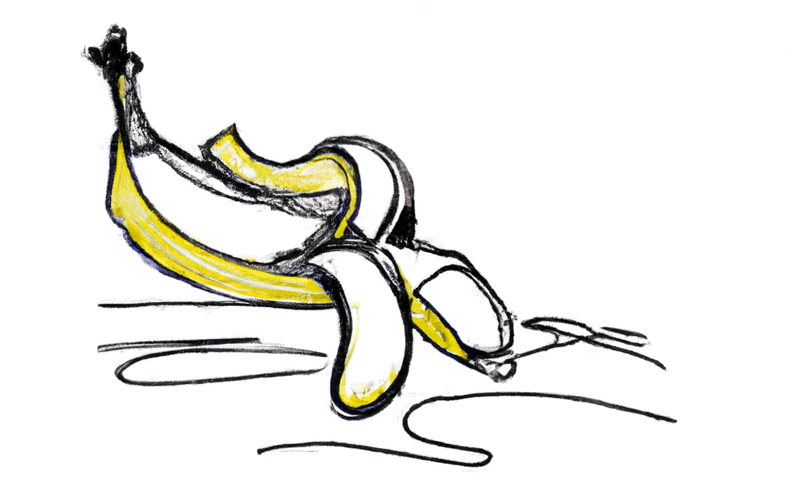
Have you wondered why this happens? Why do seemingly smart people with the best of intentions slip on the banana peel just as they are about to raise the curtain? My theory is that one (or — god help us — more) of the following syndromes is at play.
HYTO or “Have you thought of…”
This is when, after a decision to act has been finalised, someone pipes up with “But have you thought about “. This of course leads to discussion about whether that has really been thought about, often causing action to be deferred till the thinking is done. Of course, the next meeting to close has another “Have you thought of…” moment and the cycle continues. With each round, the HYTO concerns get increasingly more extreme and trivial, yet the delays continue as teams worry about not having thought of everything.
The HYTO syndrome is always about last-minute interjections, not really about brainstorming concerns and risks. My observation is that there are two kinds of habitual HYTO interjectors to watch out for. One kind is the Cynic, always convinced things are going wrong and raising every trivial concern — usually in scary-sounding areas such as compliance or security. The other kind is the Value-adder, who feels that if he can point something out that apparently no one else has thought of, his value to the team increases (of course, it applies to women too). One way to deal with this is to identify and get rid of both kinds from the team — they’re net distractions rather than net additions to a team. The other way is to make them owners, with the interjector given the mandate to close such concerns by a deadline.
SWAD or “Shouldn’t we also do …”
Just as you’re about to jump into action, you have your SWADist type say “Shouldn’t we also do…<this feature or that>“. The result is often that instead of simple decisive steps, suddenly you’re faced with building a Taj Mahal with all its plannings and delays — sometimes even the eventual demise of the project. I see team after team repeatedly adding to their charter with interjections like this, and getting nothing done.
The SWAD syndrome is about two kinds of people — the Dreamers and the Scuttlers. The Dreamers genuinely want to achieve everything in the world — wipe out world hunger, why just plan a dinner party? The Scuttlers, on the other hand, are invested in preventing change so want to push for the change to be big, expensive and thus as far away as possible.
WSET or “We should ensure that …”
Plans are in place and you’re going to go ahead when someone pipes up with “We should ensure that uptime, security or availability is …” all expressed at the 30,000m level. While non-functional requirements are legitimate, they need to be proportionate and appropriate; most such genuine concerns are usually fleshed out in the beginning of a project. All of us would have faced situations where even small rollouts get tagged at the last minute with ultra-stringent uptime, availability or other non-functional needs that are quite disproportionate or irrelevant to the rollout. These are usually accompanied by sanctimonious phrases such as “nothing less than the best” or “our reputation cannot be risked”.
The WSET interjectors (I call them Politicians) are usually the persons on the team not actually responsible for delivering the project or the NFR and consequently feel no hesitation in being sanctimonious, even while feeding a desperate need for class participation. The intent is usually to demonstrate how mature and “enterprise-thinking” he or she is. You should ensure they are heard only on debate panels and not in team meetings.
LDTF or “Let’s discuss this further…”
This is the last resort of the procrastinator. Usually wielded by the person who really does want the status quo preserved but has run out of other tactics, this is invariably accompanied by looks of deep concern for the well-being of the project owner.
I call these people Intellectuals. By elongating the discussions with LDTM, he or she hopes to preserve the status quo as long as possible, either because of a vested interest or because change is scary or sometimes simply to hear one’s own voice. Such a person will obviously never get anything done and must be encouraged to voice off in some other room.
Finally…
These interjectors are pernicious because they often express real-sounding concerns, just not at the right time or in the right proportion. This makes them hard to dismiss, even when they are obviously causing unneeded delays. While the intent is not always malicious — even the sincere or the well-meaning can waste time perfectly competently — the effect is to distract teams and delay decisions. A good manager needs the maturity to detect these syndromes, and the skill to manoeuvre past them.
 Brave For Free
Leave a comment